
Strategy: Activate your base
Focus on voters most likely to support you, then make sure they vote. This works best when your base can supply most of the votes you need.
Build a list of likely supporters and plan repeated turnout reminders.Campaign Strategy and Operations Made Simple.
New accounts need approval. Requests are reviewed within 1 to 2 business days. Focused on Democratic and progressive candidates.
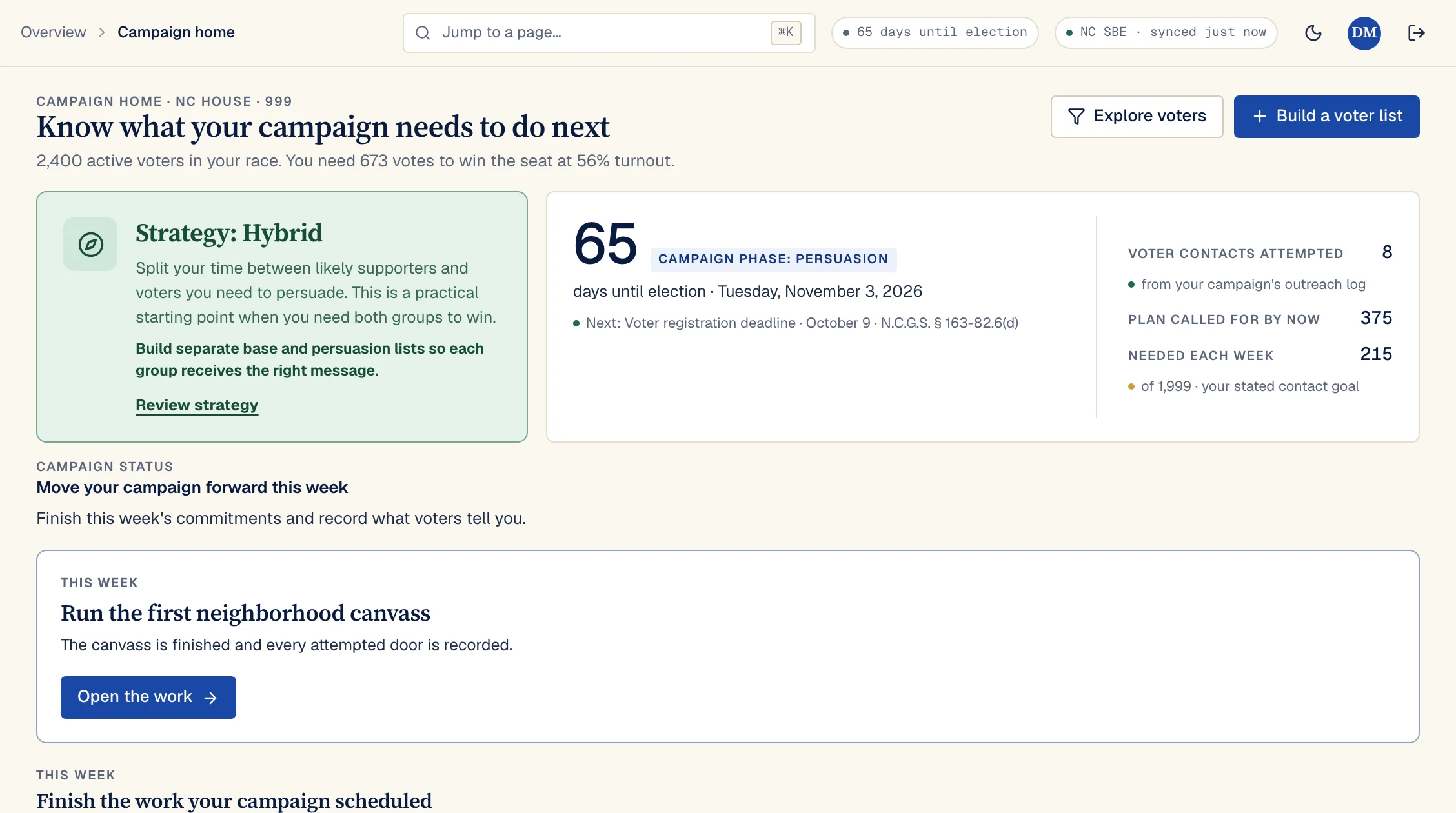
Start with a strategy for your race. Competitive Campaigns turns it into voter lists, scheduled work, field assignments, fundraising follow-up, and a clear view of what the team should do next.
Start with the strategy that fits your race. We turn it into a vote goal, targeted voter lists, and campaign work your team can complete.
Focus on voters most likely to support you, then make sure they vote. This works best when your base can supply most of the votes you need.
Build a list of likely supporters and plan repeated turnout reminders.Focus on voters who may be open to your campaign. Use direct conversations to introduce the candidate, learn what matters, and ask for support.
Build a persuasion list and start recording voter conversations.Split your time between likely supporters and voters you need to persuade. This is a practical starting point when you need both groups to win.
Build separate base and persuasion lists so each group receives the right message.Every screen below comes from the working product. The campaign, voters, volunteers, donors, addresses, and contribution records are invented for this example.
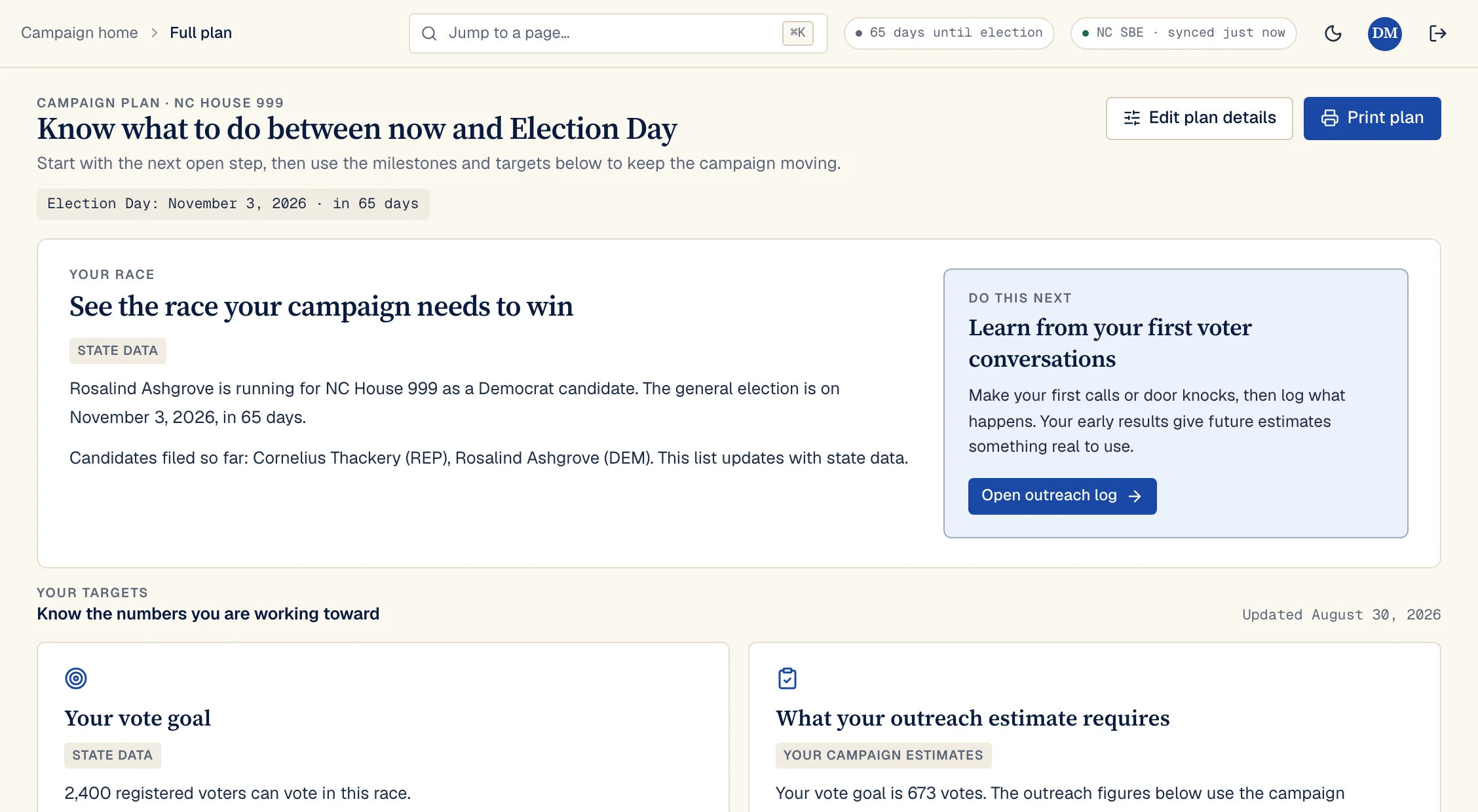
We use historical turnout data to estimate a realistic vote goal. Choose whether to focus on your base, persuasion, or both, and review the elections behind the estimate.
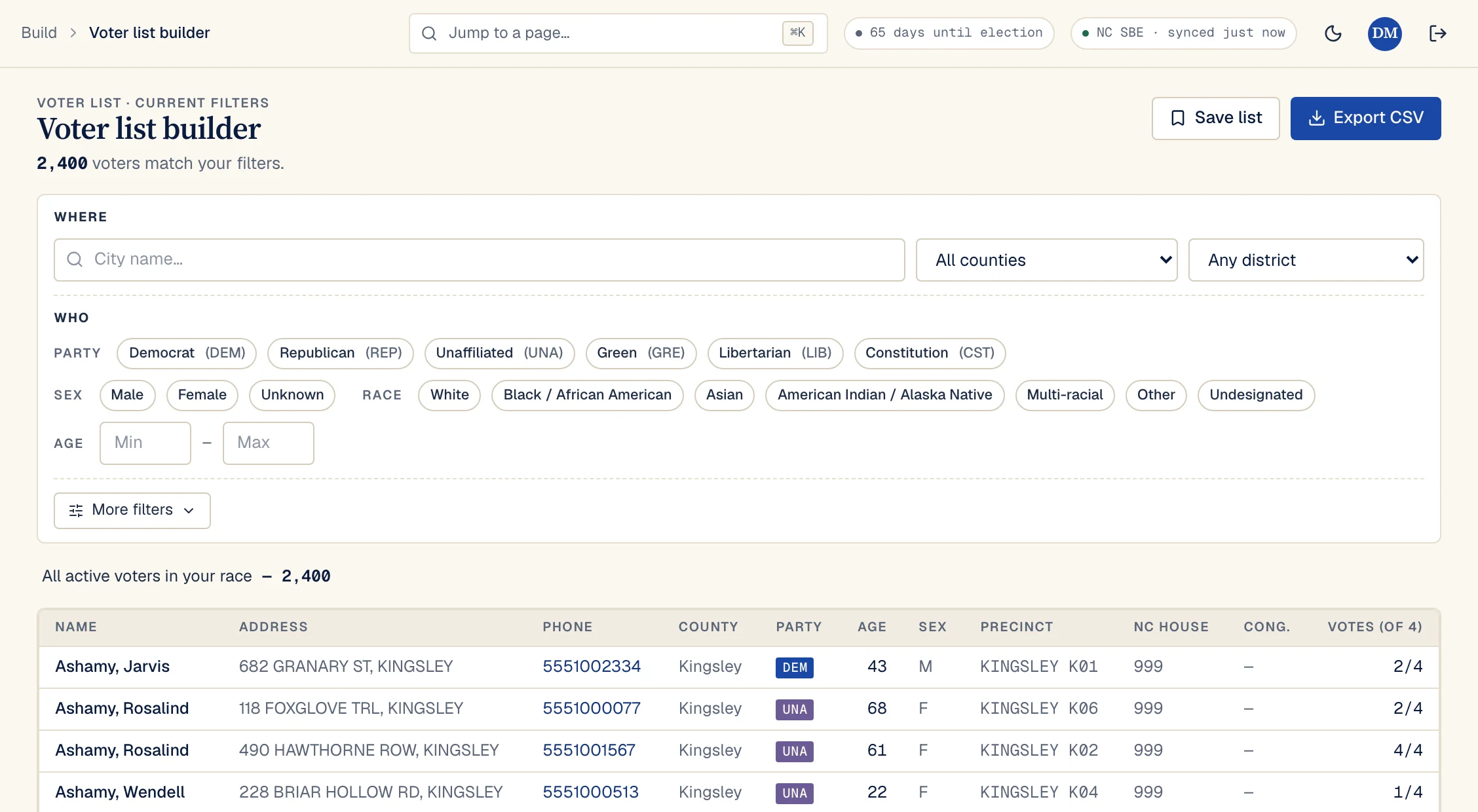
We help you find the voters who fit your strategy by party, age, precinct, past turnout, and other details. Save the list so your team can put it to work.
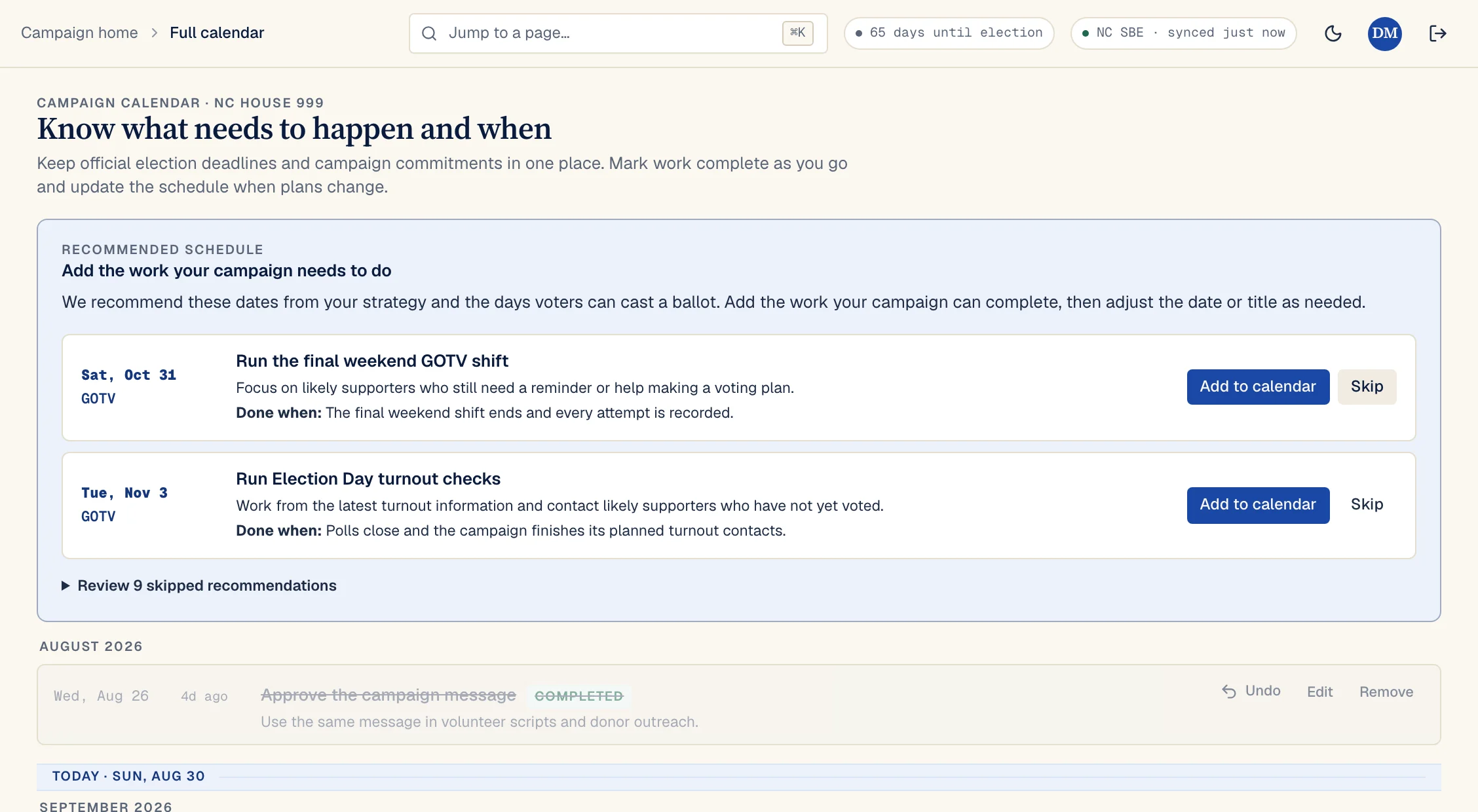
Schedule the campaign work that needs to happen between now and Election Day. Mark commitments complete and keep official deadlines beside the work your team controls.
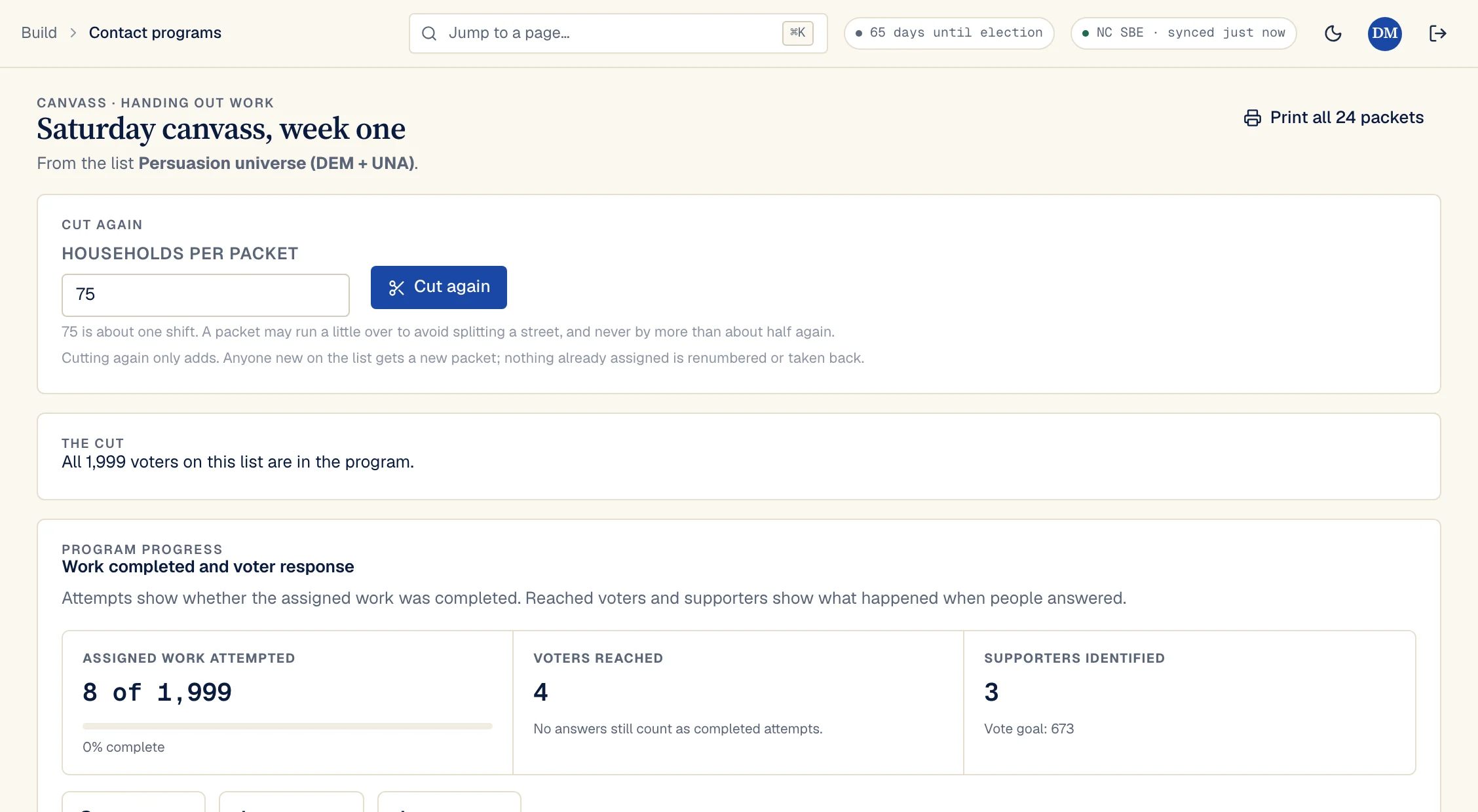
Focus volunteers on the right voters through canvassing, phone-bank planning, and other campaign work. Turn targeted lists into clear assignments your team can finish.
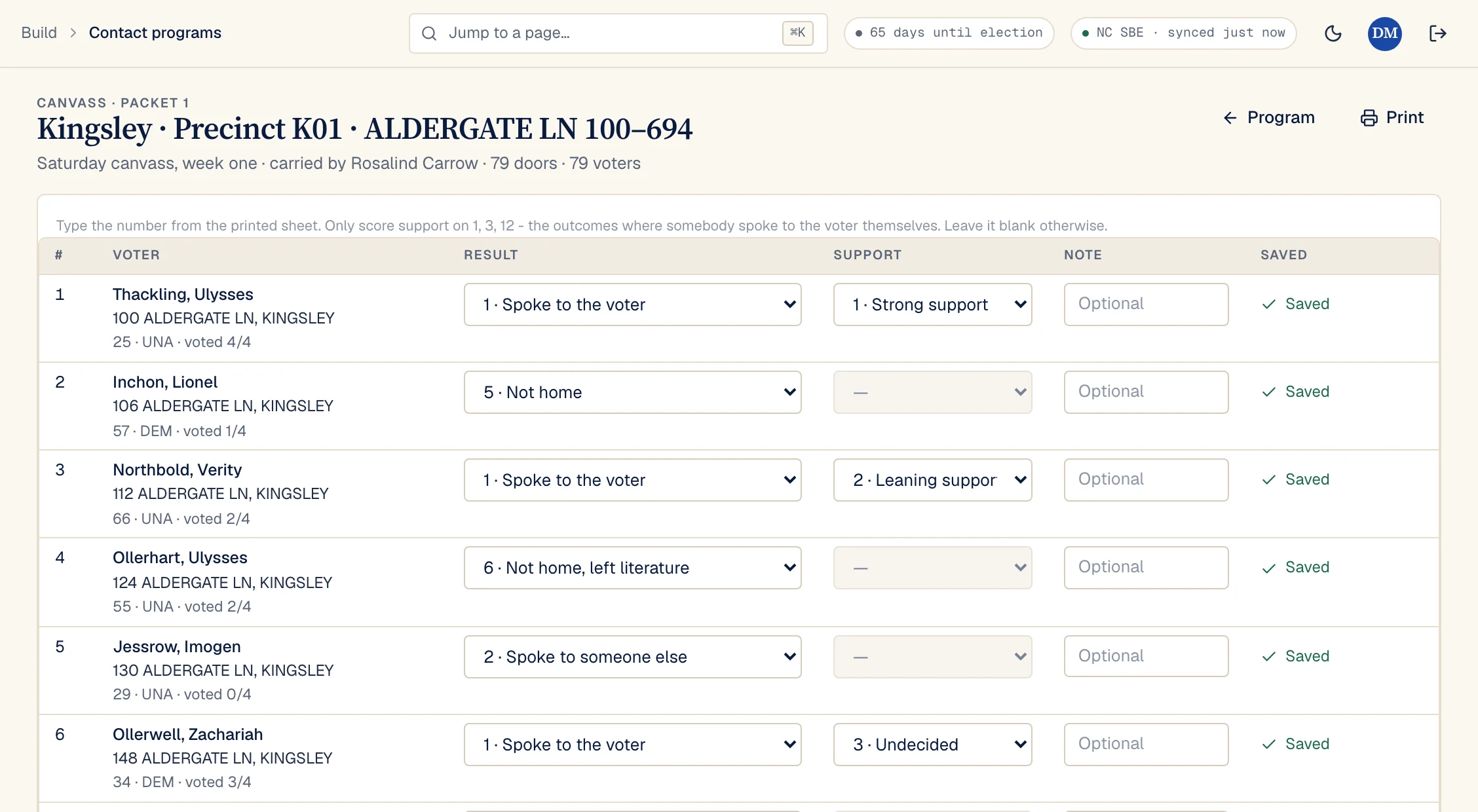
Volunteers record their results, and campaign staff see current updates in the campaign headquarters. Track who has been reached, who supports you, and who still needs follow-up.
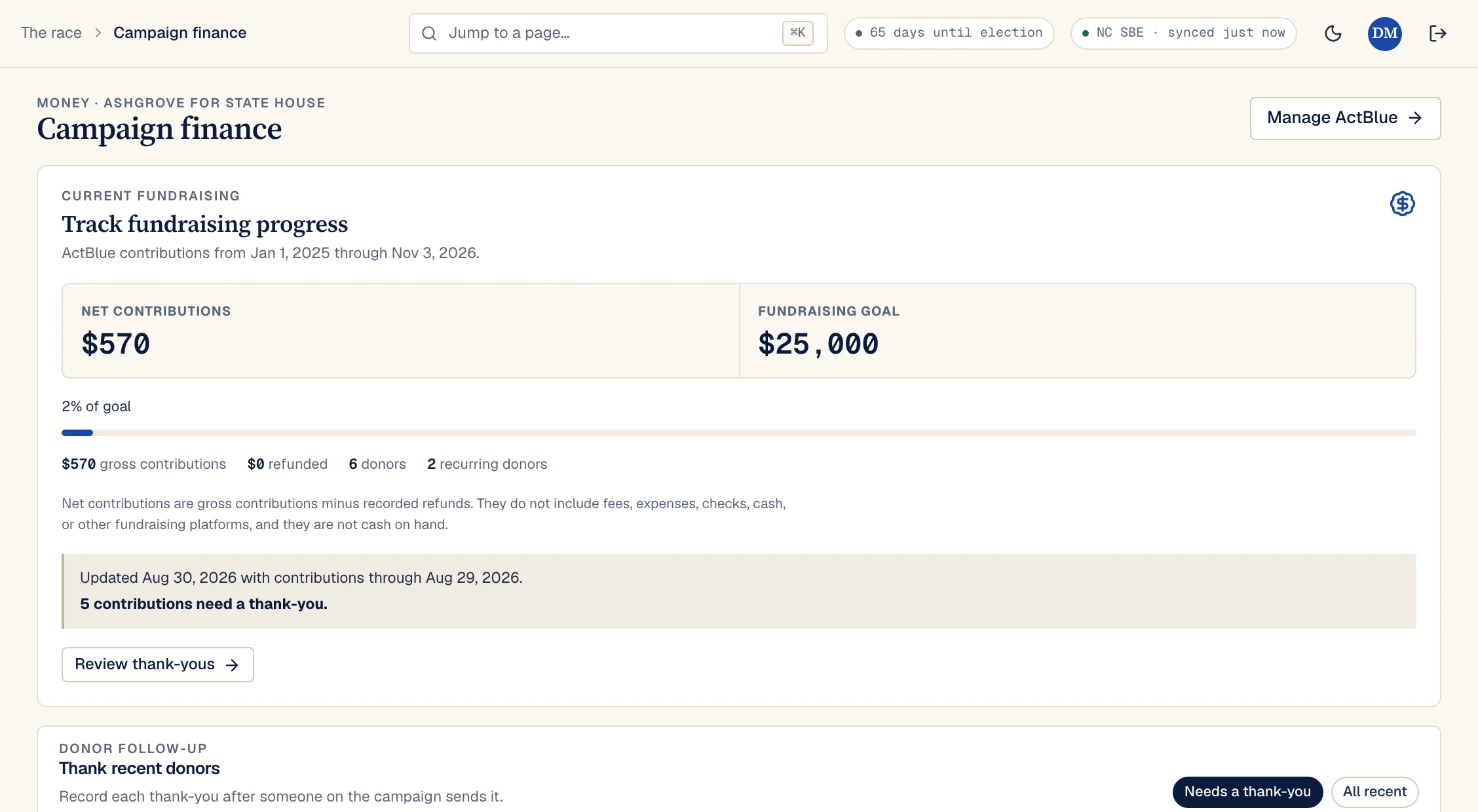
Connect the campaign's own ActBlue data, see progress toward the fundraising goal, and follow up with donors. Public committee reports help you understand the financial picture across the race.
See who has filed and review available public committee reports for the contest. Use that information to understand the field while your team stays focused on its own plan.
Sign up with email and password, Google, or Apple. We review each request before campaign access begins.
A person reviews each request within 1 to 2 business days. We email you when your account is ready.
Select the office and district, then choose a base, persuasion, or hybrid strategy. We recommend a practical starting point for the race type.
Review the vote-goal estimate and this week's priorities, then start the next piece of campaign work.
Candidates, campaign staff, and volunteers may request access. A person reviews every new account before campaign data becomes available.
Competitive Campaigns is built for Democratic and progressive candidates, campaign managers, staff, and volunteers working on supported North Carolina races. New accounts require approval, which is usually completed within 1 to 2 business days.
Choose the office and district where you are running, review the recommended campaign strategy, and confirm your starting plan. Your campaign headquarters then shows the vote-goal estimate, upcoming work, voter lists, key dates, field progress, fundraising, and public information about the race that is available for your campaign.
No technical experience is required. The product explains each next step in plain language and recommends a practical starting strategy. You still make the campaign decisions and can change the plan as you learn what works in your race.
We use historical turnout from comparable elections to estimate how many votes could be needed for the seat. The app lists the elections used and labels estimates clearly. If the available turnout or candidate information is not strong enough, we explain what is missing instead of presenting a number as certain.
Yes. A campaign owner can invite teammates and assign owner, manager, field, finance, or viewer access. Invited teammates use the campaign owner's subscription for that campaign and do not need separate subscriptions.
The voter registration and vote-history files come from the North Carolina State Board of Elections. We check for updated state files each night and show the loaded date with the data. Vote history shows whether someone participated, never how that person voted. We do not buy consumer data or use voter data for advertising.
Build a list around the campaign strategy, use it to plan canvassing or phone-bank work, and assign prepared work to volunteers. Volunteers can record attempts, conversations, and support. Progress counts completed campaign work and attempted contacts, including doors where nobody answered, so an unanswered door does not erase the work.
Each campaign connects its own ActBlue contribution page and, if it chooses, its campaign-specific contribution-data credentials. Competitive Campaigns can import and update ActBlue contributions, compare net contributions with the campaign goal, and show contributions that need follow-up. It does not process donations, replace ActBlue, or include checks, cash, fees, expenses, or other fundraising platforms in those totals.
The app shows filed candidates and available public campaign-finance disclosures for the race, including committee totals and reported spending. This information comes from public state records and may trail activity that has not been filed or loaded yet.
Competitive Campaigns does not guarantee an election result, predict how anyone will vote, send campaign calls, texts, email, or direct mail, process contributions, or replace legal, compliance, accounting, security, or campaign professionals. It helps your team plan, organize, and track the work you decide to do.
Tell us what you are running for. We review every request and reply within 1 to 2 business days.
New accounts need approval. Requests are reviewed within 1 to 2 business days. Focused on Democratic and progressive candidates.
Want to read first? County Commissioner, Board of Education · support@competitivecampaigns.com